For those who love lists, here are a few lists regarding my time here in Israel.
WORLD CUP WONDERINGS
1. I wonder how Spain lost.
2. I wonder how the U.S. didn't.
3. I wonder who my favorite underdog team is. (It's between South Korea and Cote d'Ivoire)
4. I wonder if they'll ever stop blowing those infernal horns.
FAVORITE THINGS ABOUT LIFE IN ISRAEL
1. The desert breeze at night.
2. The hammock on my porch before 7 a.m. and after 6 p.m.
3. Shade.
4. That's it's only a one-hour time difference from South Africa. (Real-time World Cup!)
THINGS I'VE LEARNED WHILE DOING MY PROJECT
1. How to say Hello and Thank You in Hebrew and Arabic.
2. How much body language can you help you understand what is being said, even when you don't understand what they're saying.
3. We're a still a ways off from equal rights for all.
4. The desire to get there is stronger than a language barrier.
QUESTIONS THAT BEGET QUESTIONS
1. Frequently I say, "I'm sorry. I don't speak Hebrew". More than once the reply has been the question "Why not?" (Really? How am I supposed to answer that?)
2. Seeing the English spelling of a word really, really helps me pronounce it, so sometimes I ask, "How do you spell that?" Again, more than once the reply has been to repeat the word. (Um, How do I rephrase my question? Hearing the word twice doesn't magically spell it in my brain.)
THINGS I'M LOOKING FORWARD TO
1. Traveling to some new parts of Israel (stay tuned for news from Haifa next week).
2. Learning a few more words in Arabic and Hebrew.
3. Meeting even more incredible women who have accomplished so much in such a short time.
Wednesday, June 16, 2010

Saturday, June 12, 2010
Pharyngal Voiced Fricatives and Love
Two days ago I went to a conference entitled Feminism: From Theory to Practice among the Bedouin women. It was presented in Hebrew and Arabic and attended by roughly 30 Bedouin women. In order to get something useful done with my time I alternated between watching the body language of the participants when each of the five panelists presented, and reading the book "The Arabic Alphabet: How to Read and Write it".
At one point in the book, the authors are describing one of the letters of the Arabic alphabet, which has no equivalent in English, and they write "The only real way to learn it is to listen to Arabs and practice incessantly," then they go on to say, "In scientific phonological terms, this letter is a pharyngal voiced fricative."
Huh?! A what?
I expect to be confused by listening to or reading Arabic, but that last sentence is in English and I still have no idea what it means.
Contrast that experience with this one. Yesterday I attended a much smaller conference with three of my colleagues, all Arab women. We were meeting in order to discuss options for a website I'm helping to create for the organization. At the beginning of the meeting they made apologies and explained that they'd be speaking in Arabic. Understandable. It's more efficient since their English, while infinitely better than my Arabic, is still cumbersome.
After being here for three weeks, I've realized that this is probably the way it's going to be while I'm here - I'm just not going to understand most of what is spoken.
Anyway, the meeting continues. Amny pulls up the site she and I worked on together and then she pulls up a rough draft I created using another program. The women discuss the pros and cons of each for a while, and then there is a shift in the conversation. Even though everything is still being said in Arabic, it's clear to me that one of the three women has either recently fallen in love or is about to get married. They talk about this for a minute and then move back to pointing at the screen and discussing the websites.
During our debrief later that day Amny confirmed that the other woman was having a formal engagement party this weekend and will be getting married soon.
After the confusion of the day before, which exemplifies the daily confusion I've resigned myself to, it was uplifting to be reminded that sometimes I'll still be able understand and connect with the women I'll be working with regardless of language and cultural barriers.
Addendums, p.s.'s, and additional thoughts:
1. That one sentence aside, the book I mentioned is actually astonishingly good at explaining the Arabic alphabet.
2. Here is the link to the rough draft website I'm creating for one of the organizations. I'm testing out the pros and cons of using Blogger. Any comments, thoughts, feedback, suggestions, or criticisms are welcomed and appreciated. Daughters of the Desert.
At one point in the book, the authors are describing one of the letters of the Arabic alphabet, which has no equivalent in English, and they write "The only real way to learn it is to listen to Arabs and practice incessantly," then they go on to say, "In scientific phonological terms, this letter is a pharyngal voiced fricative."
Huh?! A what?
I expect to be confused by listening to or reading Arabic, but that last sentence is in English and I still have no idea what it means.
Contrast that experience with this one. Yesterday I attended a much smaller conference with three of my colleagues, all Arab women. We were meeting in order to discuss options for a website I'm helping to create for the organization. At the beginning of the meeting they made apologies and explained that they'd be speaking in Arabic. Understandable. It's more efficient since their English, while infinitely better than my Arabic, is still cumbersome.
After being here for three weeks, I've realized that this is probably the way it's going to be while I'm here - I'm just not going to understand most of what is spoken.
Anyway, the meeting continues. Amny pulls up the site she and I worked on together and then she pulls up a rough draft I created using another program. The women discuss the pros and cons of each for a while, and then there is a shift in the conversation. Even though everything is still being said in Arabic, it's clear to me that one of the three women has either recently fallen in love or is about to get married. They talk about this for a minute and then move back to pointing at the screen and discussing the websites.
During our debrief later that day Amny confirmed that the other woman was having a formal engagement party this weekend and will be getting married soon.
After the confusion of the day before, which exemplifies the daily confusion I've resigned myself to, it was uplifting to be reminded that sometimes I'll still be able understand and connect with the women I'll be working with regardless of language and cultural barriers.
Addendums, p.s.'s, and additional thoughts:
1. That one sentence aside, the book I mentioned is actually astonishingly good at explaining the Arabic alphabet.
2. Here is the link to the rough draft website I'm creating for one of the organizations. I'm testing out the pros and cons of using Blogger. Any comments, thoughts, feedback, suggestions, or criticisms are welcomed and appreciated. Daughters of the Desert.
Tuesday, June 8, 2010
Some Small Insight
After my previous post, it's appropriate to begin this one by saying - I've been doing a lot of reading. In order to get to know the region in general and the organizations I'm working with in more detail I've just finished reading "From Beirut to Jerusalem" by Thomas Friedman, and I've just finished actively browsing approximately 90 websites for Jewish foundations and philanthropic organizations.
My first deliverable involved determining which of those foundations and organizations might be willing to support the organization Ma'an - The Forum of Arab Women's Organizations in the Negev. For each organization that looked like a match, I prepared an LOI, Letter of Inquiry, which asked the organization if it would like to become a partner or supporter of Ma'an and its programs. I created one document organizing all of the contact information and left some room for tracking the status of the relationships as they develop. In the non-profit world this is known as "resource development". In my world this is known as "not nearly as fun as it looks and it doesn't look that fun". This particular aspect of resource development involves more researching and organizing than I enjoy, but I'm glad it freed up Merav, my colleague in Ma'an, to work on the relationship-building aspect of resource development. And it feels good to have completed something tangible that will hopefully lead to good things for the Bedouin women's organizations.
It also feels good to be finished with "From Beirut to Jerusalem". It weighs in at just over 500 pages and is filled with fascinating insights and perspectives on this part of the world. I recommend it. I enjoyed it even more than I normally would have because I was reading it while I'm in Israel. The references made to cities, regional newspapers, or local cuisine really came alive because I could walk out my door and experience them. The information in the book helped me understand the tension in this region on an intellectual level.
It took less than one chapter of another book for me to understand the tension on a gut level.
Without going into too much detail, I'll share some pertinent pieces of my background. I was raised in Protestant churches, most frequently Southern Baptist churches. I did my fair share of Bible reading while growing up. And then I took a looooong break from it. For a variety of reasons, I decided it was important to bring a Bible to Israel.
Even when I was actively reading the Bible on a daily basis I didn't enjoy most of the Old Testament, but Israel seemed an appropriate place to try reading parts of it again. At random the other day, I opened it and read the following portion from the book of Nehemiah:
"As for the villages with their fields, some of the people of Judah lived in Kirath Arba and its surrounding settlements, in Dibon and its settlements, in Jekabzeel and its villages, in Jeshua, in Moladah, in Beth Pelet, in Hazar Shual, in Beersheba and its settlements..."
"From Beirut to Jerusalem" coming alive to some degree because I'm reading it in Israel is one thing, having the Bible come alive to some degree, any degree, is something else completely. I don't feel that it's appropriate to discuss my faith on this blog, but I'll at least say - I'm not Jewish. For me, a non-Jew, to have a noticeably strong reaction to reading a, let's face it, not-all-that-exciting passage gives me some small insight into the passions surrounding this piece of geography. In addition to not being Jewish, I'm also not Palestinian, but it's not hard to empathize and begin to understand that both groups feel similarly strong ties to this land.
Thursday, June 3, 2010
Addiction.
Hello.
My name is David.
And I'm addicted to books.
Anyone who helped me move into, or out of, my apartment this year and anyone who visited my apartment this year probably knows this. I have a lot of books. If books were words, I'd have an epic poem. If books were letters, I'd have an ocean of alphabet soup. I know I have a lot of books, but I never considered it an addiction.
One book is not that heavy, but when you gather 3 or 4, they get pretty hefty. On my 10-week journey to another country my luggage is two backpacks, not rolling suitcases, backpacks that I had to carry. In my two backpacks, I brought 17 books. For those of you not from here, that's Hebrew for SEVENTEEN. Even after lugging those books through a couple of airports, a bus, a train, and a taxi, I still never once thought to myself, "I'm addicted books."
This past week Be'er Sheva has been home to some sort of literacy campaign. As part of this campaign, there were many books for sale and on sale. Many. Beautiful. Books. On sale. Buying a book on sale does not make one an addict. No, it wasn't the two books I bought in English that tipped me off to my addiction. It really wasn't even the children's books in Hebrew that I bought. After all, I'm trying to learn Hebrew right.
What really brought me face to face with my addiction was the pictures. I was taking pictures to share my purchases on this blog. I thought I might even introduce Flat Stanley and wrap it all together with a literacy bow.
I was taking these pictures...
 This is one small section of the glorious book sale that was filled with tables and tables of books.
I bought the book below because it's in English and it's by a famous Israeli author. File under the excuse: It will help me get to know the culture.
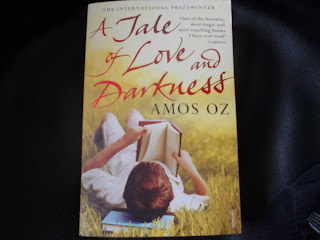
This one is also in English and by an acclaimed Israeli author. It was recommended to me by my colleague Amny. Also filed under the excuse: Getting to know the culture.

This is one of several children's books I purchased. All filed under the excuse: It's a good strategy for learning the language. Really.

Notice anything wrong with this picture? I didn't.
Took me several minutes to realize that the book was UPSIDE DOWN! I'm now purchasing books that not only can I not read, but I can't, without serious thought and effort, place right side up. I can't avoid the truth any longer.
Shalom.
My name is David.
And I'm addicted to books.
My name is David.
And I'm addicted to books.
Anyone who helped me move into, or out of, my apartment this year and anyone who visited my apartment this year probably knows this. I have a lot of books. If books were words, I'd have an epic poem. If books were letters, I'd have an ocean of alphabet soup. I know I have a lot of books, but I never considered it an addiction.
One book is not that heavy, but when you gather 3 or 4, they get pretty hefty. On my 10-week journey to another country my luggage is two backpacks, not rolling suitcases, backpacks that I had to carry. In my two backpacks, I brought 17 books. For those of you not from here, that's Hebrew for SEVENTEEN. Even after lugging those books through a couple of airports, a bus, a train, and a taxi, I still never once thought to myself, "I'm addicted books."
This past week Be'er Sheva has been home to some sort of literacy campaign. As part of this campaign, there were many books for sale and on sale. Many. Beautiful. Books. On sale. Buying a book on sale does not make one an addict. No, it wasn't the two books I bought in English that tipped me off to my addiction. It really wasn't even the children's books in Hebrew that I bought. After all, I'm trying to learn Hebrew right.
What really brought me face to face with my addiction was the pictures. I was taking pictures to share my purchases on this blog. I thought I might even introduce Flat Stanley and wrap it all together with a literacy bow.
I was taking these pictures...

I bought the book below because it's in English and it's by a famous Israeli author. File under the excuse: It will help me get to know the culture.

This one is also in English and by an acclaimed Israeli author. It was recommended to me by my colleague Amny. Also filed under the excuse: Getting to know the culture.

This is one of several children's books I purchased. All filed under the excuse: It's a good strategy for learning the language. Really.

Notice anything wrong with this picture? I didn't.
Took me several minutes to realize that the book was UPSIDE DOWN! I'm now purchasing books that not only can I not read, but I can't, without serious thought and effort, place right side up. I can't avoid the truth any longer.
Shalom.
My name is David.
And I'm addicted to books.
Wednesday, June 2, 2010
Art Appreciation
On a whim I stopped by the local theatre box office on my way to get groceries around noon today. Honestly, I'm not much of live theatre person. Plays rarely keep my interest for long, but I figured with the venue so close to my house I should try it out. "Do you ever sell discounted tickets for shows just before the show starts," I asked, hoping to find a good deal on seats that would otherwise stay empty. "No," the ticket seller replied, "but I'll give you my discount for tonight's show". Her discount was less than a third of the original price, so I decided to keep following this whim and asked about the performance. I almost laughed out loud when she told me the play being performed, but I thought it might come across as rude and it would have been difficult explaining myself.
Surprisingly, they were performing a play based on book I've read and liked. The book was also made into a very good movie. Since I was familiar with the plot and she was giving me a really, really good price on the ticket, I bought a seat for the show.
 This is my ticket stub for the play "One Flew Over the Cuckoo's Nest". For many reasons, I thought it would be hilarious to watch this play in a language I don't speak in part of the world that seems to be locked in an incomprehensible struggle.
What I didn't realize is how additionally funny it would be to watch it at the 5 p.m. showing. Here's a hint for those of you under 70 who might be visiting the Be'er Sheva playhouse in the future: If they give you the option of the 5 p.m. show or the 8:30 show, choose the later one.
Here is a shot of the stage just a few minutes before a couple hundred of Be'er Sheva's older set and I settled in to watch the play.

At the beginning of the play I expected to come home and write some pithy blog about dealing with the madness in this and other parts of the world. Too obvious. Thankfully, that wasn't what struck me about the experience. To my surprise, I really, really enjoyed the play. In some ways I enjoyed it more by not knowing the language. Since I was familiar with the story line, but unable to follow the dialog, I studied the performances of the individual characters and pondered the symbolic elements of both the story and the play. Someday I'd like to be like Ken Kesey and write something that's meaningful to people regardless of the language they speak. This experience helps me appreciate the work being done by my friends Becca, Judy, and Sarah on their art-based IPSPs.
Surprisingly, they were performing a play based on book I've read and liked. The book was also made into a very good movie. Since I was familiar with the plot and she was giving me a really, really good price on the ticket, I bought a seat for the show.

What I didn't realize is how additionally funny it would be to watch it at the 5 p.m. showing. Here's a hint for those of you under 70 who might be visiting the Be'er Sheva playhouse in the future: If they give you the option of the 5 p.m. show or the 8:30 show, choose the later one.
Here is a shot of the stage just a few minutes before a couple hundred of Be'er Sheva's older set and I settled in to watch the play.

At the beginning of the play I expected to come home and write some pithy blog about dealing with the madness in this and other parts of the world. Too obvious. Thankfully, that wasn't what struck me about the experience. To my surprise, I really, really enjoyed the play. In some ways I enjoyed it more by not knowing the language. Since I was familiar with the story line, but unable to follow the dialog, I studied the performances of the individual characters and pondered the symbolic elements of both the story and the play. Someday I'd like to be like Ken Kesey and write something that's meaningful to people regardless of the language they speak. This experience helps me appreciate the work being done by my friends Becca, Judy, and Sarah on their art-based IPSPs.
Tuesday, June 1, 2010
The Wheels on the bus...
Several of my classmates have posted about experiences on buses in their respective countries. I had my own bus experience today that I'll add to the chorus.
I woke up this morning to an email which led me to getting directions to go south into the desert, and gave me the name of a bus stop (not a city). I didn't have time to check a map if I was going to make the first bus, so I raced out the door.
I'll skip the now familiar details related to my lack of understanding of the written and spoken language and say that I missed the first bus. :-)
The second bus came by in less than hour. Many young soldiers (there is mandatory military service for Israeli Jewish men and women 18-21 yrs old), myself, and several other random folks piled into a fairly nice bus. It was pretty much a tour bus with comfy seats, air conditioning, and a radio doing its part to contribute to my immersion language strategy.
Some of the soldiers were armed with rifles, which is pretty normal around these parts, but I'm still not used to seeing it. As many of you have heard and seen, there was an incidence of violence between the Israeli military and a boat bound for Gaza. The Israeli military killed several people on the boat and the international community, including the surrounding Arab countries, have been very critical of Israel's actions. One result was a general strike by all of the Israeli Arabs in the country. I thought that meant all Israeli Arabs would be staying home today, but at the second bus stop that theory was proven wrong.
Nearly a dozen Arab men, women, and children boarded the already full bus and had to stand in the aisles while we journeyed on.
As soon as they boarded I felt the tension rise. And as soon as I bothered to look around at the other passengers I realized it was only my tension level that rose. The Arabs had clearly just returned from a grocery shopping trip and were laughing and chatting. The soldiers were listening to their ipods or sleeping. And everyone else was just minding their own business or chatting.
The ride was entirely uneventful. I got to look at some desert scenery and tap several neighbors on the shoulder until I found one who helped me recognize my stop.
I shared my surprise and concerns and realizations with my client once I arrived. She laughed the kind of laugh that let me know I'd never quite understand unless I lived here. "The tension is always here," she said and explained that it both was and wasn't a really big deal. People couldn't let it stop them from going on with their lives, buying their groceries, completing their tour of duty, and getting up and going to work. Increased tension and violence in one part of the country impacts everyone to some degree, but thankfully it hasn't escalated to the point that there is violence everywhere. And generally things are less tense in southern Israel where I am. There is still some hope that daily life will return to a more normal level of tension relative to this part of the world for all parts of the country soon.
I woke up this morning to an email which led me to getting directions to go south into the desert, and gave me the name of a bus stop (not a city). I didn't have time to check a map if I was going to make the first bus, so I raced out the door.
I'll skip the now familiar details related to my lack of understanding of the written and spoken language and say that I missed the first bus. :-)
The second bus came by in less than hour. Many young soldiers (there is mandatory military service for Israeli Jewish men and women 18-21 yrs old), myself, and several other random folks piled into a fairly nice bus. It was pretty much a tour bus with comfy seats, air conditioning, and a radio doing its part to contribute to my immersion language strategy.
Some of the soldiers were armed with rifles, which is pretty normal around these parts, but I'm still not used to seeing it. As many of you have heard and seen, there was an incidence of violence between the Israeli military and a boat bound for Gaza. The Israeli military killed several people on the boat and the international community, including the surrounding Arab countries, have been very critical of Israel's actions. One result was a general strike by all of the Israeli Arabs in the country. I thought that meant all Israeli Arabs would be staying home today, but at the second bus stop that theory was proven wrong.
Nearly a dozen Arab men, women, and children boarded the already full bus and had to stand in the aisles while we journeyed on.
As soon as they boarded I felt the tension rise. And as soon as I bothered to look around at the other passengers I realized it was only my tension level that rose. The Arabs had clearly just returned from a grocery shopping trip and were laughing and chatting. The soldiers were listening to their ipods or sleeping. And everyone else was just minding their own business or chatting.
The ride was entirely uneventful. I got to look at some desert scenery and tap several neighbors on the shoulder until I found one who helped me recognize my stop.
I shared my surprise and concerns and realizations with my client once I arrived. She laughed the kind of laugh that let me know I'd never quite understand unless I lived here. "The tension is always here," she said and explained that it both was and wasn't a really big deal. People couldn't let it stop them from going on with their lives, buying their groceries, completing their tour of duty, and getting up and going to work. Increased tension and violence in one part of the country impacts everyone to some degree, but thankfully it hasn't escalated to the point that there is violence everywhere. And generally things are less tense in southern Israel where I am. There is still some hope that daily life will return to a more normal level of tension relative to this part of the world for all parts of the country soon.
Sunday, May 30, 2010
Existential Crisis
In theory, I'll be working with 8, maybe 9, Bedouin women's groups. At this point, I've met with 5 of the organizations. Each meeting goes something like this...
Amny, my colleague from Shatil, and I arrive at a meeting with a representative of the organization.
The representative sees Amny and her eyes light up with recognition.
Then the representative sees me and her eyes say, "What's he doing here?" They wouldn't actually express that out loud, so I could be projecting because...
Once I see the look in their eyes, I briefly panic and think to myself "What am I doing here?"
Turns out there aren't a lot of American men hanging out in the Bedouin women's groups in the Negev.
My lack of fluency in the language, culture, and politics of the region has definitely created bouts of insecurity and some degree of an existential crisis in the early stages of this project.
Turns out I'm not the only one wrestling with those issues.
"What exactly is a Bedouin?" is a question I've asked several folks. I did a bit of reading about the Bedouin before arriving, but I still couldn't easily define them.
The first couple of folks I asked were non-Bedouin and they had a difficult time answering it.
They could tell what they're not: Bedouins have "old" customs and traditions, but they are not defined by adherence to a single set of traditional religious principles, like the Quakers.
They could tell me what they used to be: Nomads. Herders who wandered the desert.
They invoked the concept "culture". Bedouins share a common culture, but they couldn't really describe the culture, so it wasn't of much help.
Today I attended a workshop led by The Right Question Project for some of the representatives of the women's groups. During one of the breaks I posed my question to one of the Bedouin women. Surprisingly, her responses were similar to the others I'd gotten.
Bedouins were nomadic herders that have become sedentary for a variety of reasons.
Bedouins don't share a common religion.
Bedouins do share common traditions: some healthy, like being extraordinarily hospitable; some unhealthy, which I'll categorize in general terms as denying women some of their basic human rights.
What I gathered from our brief conversation is that the Bedouin have not been able to clearly define themselves as a group since losing their ability to be nomadic herders of the desert.
Our independent existential crises give me some solace. They allow me to reframe my initial separate questions from "What is he doing here?" and "What am I doing here?" into one shared question: "What are we doing here?" That's a question that implies unity and co-creation. And it's one I look forward to answering together for the next 9 weeks.
Here is a picture taken at today's training of some of the women I'll be answering it with.

Amny, my colleague from Shatil, and I arrive at a meeting with a representative of the organization.
The representative sees Amny and her eyes light up with recognition.
Then the representative sees me and her eyes say, "What's he doing here?" They wouldn't actually express that out loud, so I could be projecting because...
Once I see the look in their eyes, I briefly panic and think to myself "What am I doing here?"
Turns out there aren't a lot of American men hanging out in the Bedouin women's groups in the Negev.
My lack of fluency in the language, culture, and politics of the region has definitely created bouts of insecurity and some degree of an existential crisis in the early stages of this project.
Turns out I'm not the only one wrestling with those issues.
"What exactly is a Bedouin?" is a question I've asked several folks. I did a bit of reading about the Bedouin before arriving, but I still couldn't easily define them.
The first couple of folks I asked were non-Bedouin and they had a difficult time answering it.
They could tell what they're not: Bedouins have "old" customs and traditions, but they are not defined by adherence to a single set of traditional religious principles, like the Quakers.
They could tell me what they used to be: Nomads. Herders who wandered the desert.
They invoked the concept "culture". Bedouins share a common culture, but they couldn't really describe the culture, so it wasn't of much help.
Today I attended a workshop led by The Right Question Project for some of the representatives of the women's groups. During one of the breaks I posed my question to one of the Bedouin women. Surprisingly, her responses were similar to the others I'd gotten.
Bedouins were nomadic herders that have become sedentary for a variety of reasons.
Bedouins don't share a common religion.
Bedouins do share common traditions: some healthy, like being extraordinarily hospitable; some unhealthy, which I'll categorize in general terms as denying women some of their basic human rights.
What I gathered from our brief conversation is that the Bedouin have not been able to clearly define themselves as a group since losing their ability to be nomadic herders of the desert.
Our independent existential crises give me some solace. They allow me to reframe my initial separate questions from "What is he doing here?" and "What am I doing here?" into one shared question: "What are we doing here?" That's a question that implies unity and co-creation. And it's one I look forward to answering together for the next 9 weeks.
Here is a picture taken at today's training of some of the women I'll be answering it with.

Subscribe to:
Posts (Atom)